
Rhine's Record-Low Water Level Exposes WWII-Era Bomb in Cologne
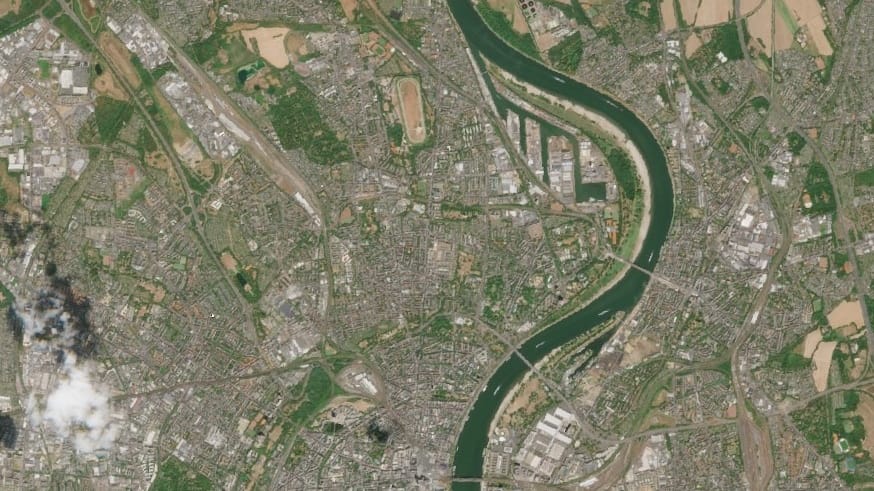
As summertime drought and heat eat away at water levels on Northern Europe's rivers, industries dependent upon river transport are feeling the effects - but it is making it simpler to clean up underwater hazards. On Thursday, a WWII-era bomb was removed from the bottom of the Rhine at Cologne, where wading-depth water made the aging explosive device easier to spot.
The Second World War left Germany littered with unexploded bombs, and EOD teams still get regular calls today to deal with 80-year-old explosives. This particular device was an American-made 500-pound aerial bomb.
Responders cleared residents from a 400-yard safety zone around the site before defusing the bomb, then brought in heavy equipment to pull the device out of the sand.
River gage levels in Cologne hit just 26 inches on Thursday, a new record. The gage at Kaub - the limiting point for traffic between the Lower and Upper Rhine - hit just nine inches, a record low level, and well below the minimum required for standard commercial navigation. This diverts river commerce onto very limited road and rail resources for transport between the lower reaches of the river - including major industrial zones in Rotterdam, the Ruhr Valley, Frankfurt and Ludwigshafen - and the upper reaches as far upstream as Basel. Even on the Lower Rhine, water levels are so low that barges are unable to transit at full load. The net effect is a slowdown in production and a hit to the German economy, estimated in the range of 0.25 percent of GDP per month of drought - an unwelcome addition to existing economic pressure from foreign competition and elevated energy costs.

that matters most
Get the latest maritime news delivered to your inbox daily.
Long term, the repeated droughts require a shift in thinking for industrial companies in Europe, starting with stockpiling and warehousing for key feedstocks and components. This allows manufacturers a bigger buffer for periods when transport shuts down, but it is a reversal for industries more used to a "lean," "just-in-time" manufacturing philosophy - and it increases operating costs.
Other river users are feeling the pinch, too. Cruise operations are restricted or canceled on the Rhine and Danube. Hungary's sole nuclear powerplant - the source of 40 percent of its generating capacity - has had to shut down because of limited access to cooling water from the Danube. Next in line is Romania's sole operating nuclear reactor, which is within days of losing access to cooling water. The Romanian Navy is taking urgent action to divert more flow towards the powerplant and buy time, using explosives to blow up a submerged rock and preparing to sink four barges into the river to redirect water. These strenuous efforts might buy 10 more days of power generation, the plant's director told local media.
